
Sarasota, Florida 34239
Schedule a Consultation
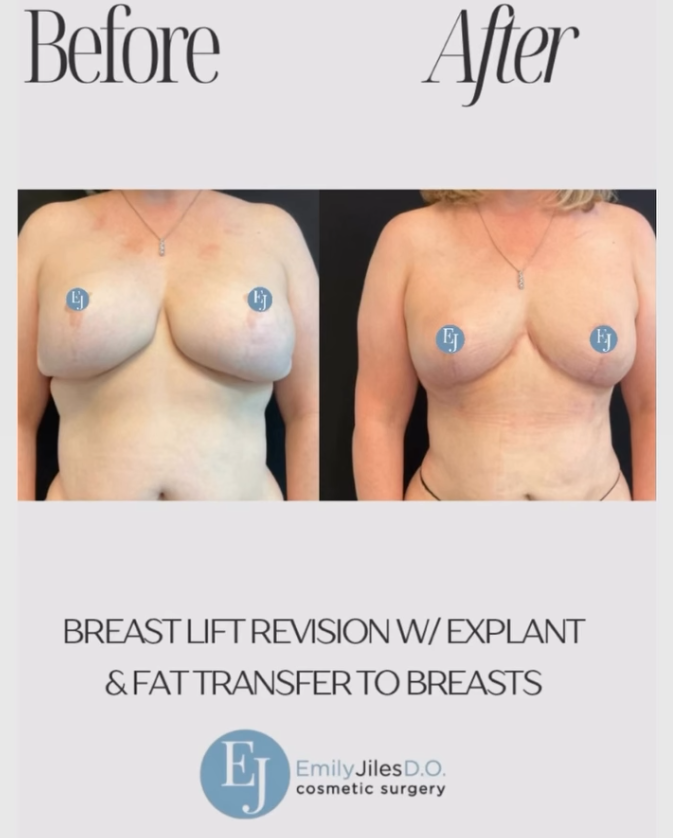
Over time, our bodies and aesthetic goals change. Breast implants that once felt perfect may no longer match your needs. Perhaps you’ve noticed changes in size, shape, or positioning, or you’re experiencing discomfort from issues like capsular contracture. These issues may arise from poor implant placement, aging, pregnancy, or even weight fluctuations.
Luckily, a breast enhancement revision surgery can address these concerns. Whether you want to replace aging implants, ease discomfort, remove scars, or achieve a new look, Dr. Emily Jiles will help you meet your unique needs.
During surgery, the Dr. Jiles will make small incisions, often along the original incision lines from the previous procedure. This helps minimize visible scarring. Depending on your goals, she will either remove, replace, or reposition your breast implants.
If you’re replacing implants, Dr. Jiles will remove the old implants and the surrounding scar tissue. This step is essential, especially if complications like capsular contracture (hardening of the tissue around the implant) are present. The pocket is then reshaped or repositioned to accommodate the new implants. Thereafter, the implants (whether saline, silicone, or a different style) are inserted into the breast pocket.
In some cases, a breast lift or breast reduction is also performed to improve the breast’s appearance and provide better symmetry. This may involve tightening the skin and reshaping the breast tissue for a more youthful contour.
Once the desired changes are made, the incisions are closed with sutures. The whole procedure lasts 1 to 3 hours, depending on the complexity of the revision.
The procedure is ideal for anyone seeking to address issues with their current breast implants or improve their overall appearance. This includes individuals experiencing complications, such as capsular contracture, implant rupture, or displacement, and those who desire to change the size, shape, or type of their implants, such as switching from saline to silicone.
Additionally, individuals dissatisfied with how their breasts have aged over time due to changes in weight, pregnancy, or natural aging may benefit from revision surgery. The surgery is also appropriate for correcting asymmetry or enhancing comfort.
Overall, the best candidates should be non-smokers who have good health, a stable weight, and realistic expectations about the procedure. They should also be ready to forgo their daily routines a few weeks after the procedure. This will help ease pressure on the surgical areas, give the body enough to heal, and minimize the risks of infection.

It’s taken me months to write this review, but I wanted to provide a review that pertained to more than just an initial opinion. I had breast implants placed 15 years ago by a different surgeon. One ruptured and Dr. Jiles is the surgeon that I trusted to clean the old implant out and replace with new implants. She also performed a tummy tuck on me at the same time. From the initial consult she was honest, and thorough in her evaluation and answered all my questions. The day of surgery she eased my nerves and truly became everything I needed to get through it. Her quick follow up assured me that all went great. Any questions I had during recovery she made sure she made the time to address and provide feedback that my recovery went wonderful. In the past several months I have been blessed to see her amazing work, the vision we both spoke about and seeing the strong foundation that she healed within me. I have become much stronger and confident with an added bonus of lower back pain that no longer exists from her repairing my muscles. Dr.Jiles and her staff are caring and make the time to meet your needs! I will choose her for any care in the future that could come up.
During the consultation, you’ll have the opportunity to discuss your concerns, goals, and expectations. Dr. Jiles will review your medical history, including previous surgeries, health conditions, and current medications. This helps determine the best course of action for your specific needs.
Next, Dr. Jiles will perform a physical exam, assessing the current state of your breasts and any issues with your implants. She will then suggest appropriate surgical options, including implant type, size, and the best approach to correct any complications.
Dr. Jiles will also explain the potential risks, complications, and expected outcomes, ensuring you fully understand the process. This is also your time to ask any questions and voice concerns.
By the end of the consultation, you should understand the procedure, the recovery process, and the expected results. We only charge $100 as a consultation fee, which will be added to the total cost of the procedure should you decide to proceed with the surgery.
The recovery timeline for a breast implant revision surgery differs from person to person. It is mostly influenced by the complexity of the procedure and the body’s healing ability. Here is what to expect during the recovery process:
Breast augmentation revision surgery offers a chance to not only address your aesthetic concerns but also enhance your confidence and comfort. While it is generally safe when performed by a qualified surgeon, like Dr. Jiles, it still comes with potential risks and complications. However, the risks can be avoided if proper measures are taken. These include:

So happy with my results! To say I am ecstatic is an understatement. After interviewing 2 previous doctors, I found Dr. Jiles. I wanted my 18 year old implants removed. They had always been larger than what I had wanted but I had just learned to live with them. I just wanted to be free of the weight & size of the original implants. I also decided that I wanted to work with a female doctor, who I felt would truly listen to me. As soon as I had my consultation with Dr. Jiles, I knew immediately she was the doctor I wanted to work with! After discussing the possible results of removing the implants, & how I would appear afterward, my final decision was to have a breast lift preformed, and very small implants inserted (200cc) just to reserve the femininity and shape of my breasts. I could not be happier! If you are considering a procedure & are interviewing other doctors, I highly recommend you come talk to Dr. Jiles. It was a smooth process from beginning to end and what a wonderful office staff & medical staff (i'm so bad with names, but the nurses were comforting and the anesthesiologist was *AMAZING* and listened to my concerns) I know this is long but I cannot rave enough about how excited I am with my results. Thank you so much Dr. Jiles & team.
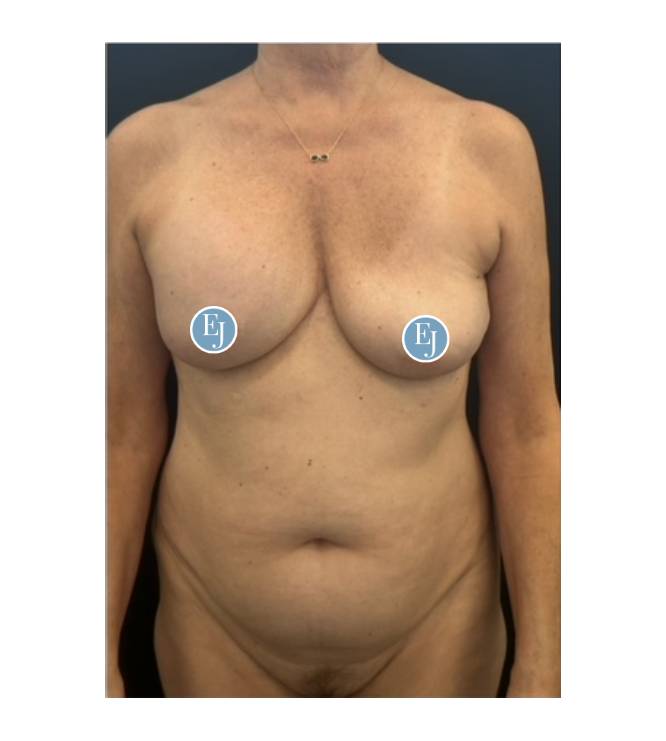
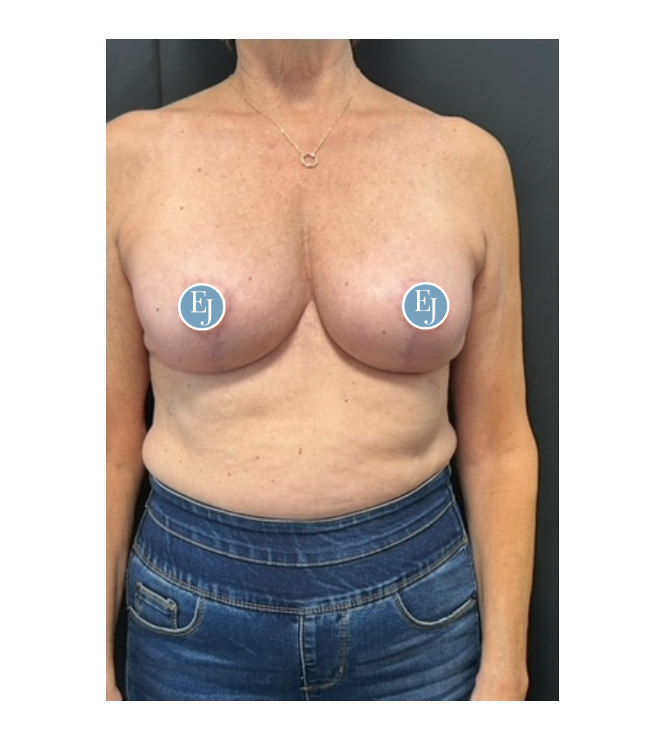
On average, the cost of breast revision surgery can range from $5,000 to $10,000 or more. The pricing mostly depends on the type and scope of the revision needed.
Other factors include the surgeon’s fees (experienced surgeons often charge higher fees due to their specialized skills and training), anesthesia fees, facility fees, implant costs, location of the clinic, and post-operative care. This may include follow-up visits, medications, and recovery aids.
Dr. Jiles is a highly skilled cosmetic surgeon with over 12 years of experience in aesthetic procedures. She holds certifications from the American Board of Cosmetic Surgery, the American Board of Facial Cosmetic Surgery, and the American Board of Surgery.
Dr. Jiles is known for providing excellent customer support and personalized care, ensuring each treatment plan meets the unique needs of her patients. She will listen to your goals, evaluate your concerns, and customize a treatment plan to achieve the best results.
In addition to her impressive qualifications, Dr. Jiles is an active member of several organizations, including the American College of Surgeons, the American Academy of Cosmetic Surgery, and the Florida Medical Association. She also offers reasonable pricing for breast revision surgery and financing options through Care Credit and Cherry.

Dr. Jiles is absolutely amazing. She made me feel comfortable and at ease with my choice of boobage. She is a professional through and through and did an amazing job from start to finish. If you're looking for breast augmentation, tummy tuck or a face lift Dr. Jiles should be your choice as she is triple board certified and also an awesome human being.
To schedule a personal consultation with Dr. Emily Jiles, call us at (941) 867-7682.
Breast revision surgery is a secondary procedure used to correct complications or improve the results of a previous breast augmentation. It may involve removing, replacing, or repositioning implants, adjusting the implant pocket, treating scar tissue, or combining the revision with another breast procedure.
Breast implant revision may be considered when a patient experiences:
Some patients want to exchange older implants for a different size, shape, profile, or material. Others decide that breast implant removal is more appropriate than replacement.
Revision surgery may also include a breast lift when the skin and breast tissue have stretched or settled over time. A lift can reposition the breast tissue and nipple while the implant revision addresses volume and pocket placement.
Not every concern requires another operation. Skin quality, tissue thickness, existing scars, and the condition of the implant pocket can limit what can be safely and predictably changed.
A breast revision consultation helps determine whether surgery is recommended, which corrections may be possible, and what tradeoffs should be considered before moving forward.
Choose a breast revision surgeon with specific experience evaluating and correcting complications from previous breast implant surgery. Secondary breast surgery is often more complex than a first-time augmentation because the surgeon must work with existing scars, altered tissue, and a previously created implant pocket.
During a consultation, ask how the surgeon approaches concerns such as:
A qualified surgeon should explain what may have contributed to the current concern, what can realistically be improved, and what limitations or tradeoffs may be involved.
Credentials and surgical training also matter. Dr. Emily Jiles completed general surgery residency training followed by cosmetic surgery fellowship training in New York. Her professional affiliations include the American College of Surgeons and the American Academy of Cosmetic Surgery.
Before choosing a surgeon, review breast revision results involving concerns similar to yours. Dr. Jiles’ breast augmentation revision before-and-after gallery can help you understand the range of cases treated, although individual outcomes will vary.
A thorough consultation should feel specific to your body and surgical history rather than based on a standard recommendation. Bring previous operative reports, implant information, and relevant imaging when available.
A breast revision consultation includes a review of your previous surgery, current concerns, breast anatomy, implant position, and goals for correction. The purpose is to determine what may be causing the problem and which surgical options could reasonably address it.
During the consultation, Dr. Emily Jiles may review:
The physical examination may include an evaluation of:
Based on the findings, Dr. Jiles may discuss implant exchange, implant removal, capsule treatment, pocket adjustment, internal support, or combining the revision with a lift or reduction.
The consultation also includes a discussion of surgical risks, expected recovery, incision placement, realistic outcomes, and factors that may limit the result. Previous records and implant device information can be helpful, but they are not required in every case.
To discuss your concerns and possible breast revision options, schedule a consultation with Dr. Emily Jiles.
The 45/55 rule is an aesthetic guideline suggesting that approximately 45 percent of breast fullness sits above the nipple and 55 percent sits below it. This proportion can create a gentle upper slope and fuller lower breast rather than a round or top-heavy appearance.
The concept may be useful when discussing goals for breast revision surgery, particularly when the existing implants appear too high, too low, overly round, or out of proportion with the torso. It can also help patients describe how they would like the upper and lower portions of the breast to look after surgery.
The 45/55 rule is not a required measurement or a standard that suits every patient. Breast shape and proportion are influenced by:
Some patients prefer a subtle upper-breast slope, while others want more upper-pole fullness. During a breast revision consultation, the ratio can serve as a visual reference rather than a promise of a specific shape.
The most useful approach is to compare your current breast shape with the result you want and discuss what is realistically achievable based on your anatomy, tissue quality, and prior surgery.
Breast revision surgery typically takes about one to three hours, although more complex procedures may require additional time. The length of surgery depends on what needs to be corrected and whether other procedures are performed at the same time.
A relatively straightforward breast implant exchange may take less time than a revision involving:
Previous breast surgery can make the procedure less predictable because the condition of the capsule, breast tissue, and implant pocket may not be fully understood until the area is evaluated directly during surgery.
The goal is not to complete the operation as quickly as possible. Dr. Emily Jiles carefully evaluates implant position, scar tissue, breast shape, symmetry, and tissue support before making the necessary adjustments.
During your consultation, Dr. Jiles can explain which parts of your surgical plan are likely to affect the length of your procedure.
Most patients can expect swelling, bruising, tightness, and activity restrictions during the first several weeks after breast revision surgery. The recovery timeline varies depending on whether the procedure involves a simple implant exchange, scar-tissue removal, pocket repair, or an additional lift.
A general breast revision recovery timeline may include:
Recovery may take longer when surgery includes extensive capsule removal, internal pocket repair, or a breast lift with implant revision.
Patients should follow their individualized instructions for:
Contact the surgical team if you develop worsening pain, unusual swelling, increasing redness, drainage, fever, shortness of breath, or another unexpected symptom.
Breast revision surgery carries risks such as infection, bleeding, scarring, changes in sensation, implant complications, and the possibility of additional surgery. Revision procedures can be more complex than primary breast augmentation because the tissue and implant pocket have already been altered.
Potential breast revision risks include:
Some changes in sensation may improve as swelling decreases and nerves recover, while others may be longer lasting. Scar appearance also varies based on incision placement, genetics, skin tension, healing history, and postoperative care.
Perfect symmetry cannot be guaranteed. Natural differences between the breasts may remain, especially when prior surgery, scar tissue, implant complications, or differences in skin quality affect one side more than the other.
Risk can be influenced by smoking, certain health conditions, medications, previous healing problems, and the complexity of the planned correction. Dr. Jiles reviews these factors during the consultation and explains which concerns may be most relevant to your case.
Patients experiencing pain, firmness, implant movement, breast-shape changes, or suspected rupture after a previous augmentation should seek a professional evaluation rather than trying to diagnose the issue based on appearance alone.